
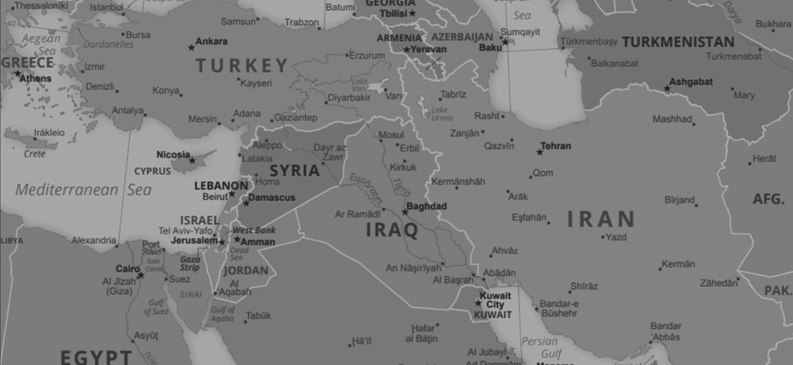
Tensions between the United States, Israel and Iran have moved beyond political headlines and are now affecting financial markets. For investors – and for everyday savers – the key issue is energy.
The global price of oil, known as Brent Crude, has risen to around $82 a barrel. At the same time, European natural gas prices have climbed sharply. When energy prices rise quickly, it can affect inflation, interest rates and investment markets in both the UK and the US.
Why energy matters so much
A large share of the world’s oil passes through the Strait of Hormuz, a narrow shipping route near Iran. About one fifth of global oil supply moves through this channel. Even without a formal blockade, increased tensions can disrupt shipping, raise insurance costs and reduce supply.
Oil at $82 is not, on its own, an extreme level by historical standards. However, the speed of the rise has unsettled markets. Investors had been expecting inflation to continue falling gradually. Higher energy prices make that less certain.
Natural gas is another important factor, particularly for Europe and the UK. Qatar supplies roughly 20% of the world’s liquefied natural gas (LNG). Disruption there has pushed up prices in Europe, which relies more heavily on LNG since Russian pipeline gas was reduced. This matters because higher gas prices can feed through into household energy bills and business costs.
What this means for markets
Stock markets have reacted negatively. In the UK, the FTSE 100 has fallen, while in the US both the S&P 500 and the Nasdaq 100 have shown signs of weakness. Investors are reassessing company profits in a world where fuel and transport costs may stay higher for longer.
The main concern is not just slower growth, but the risk of “stagflation” – a period of weaker economic activity combined with rising prices. If oil were to rise significantly above current levels, perhaps towards $100 a barrel, the impact on growth in the UK, US and globally would be more noticeable.
Interest rates and central banks
Higher energy prices can also influence central banks. If inflation looks likely to stay higher, interest rate cuts may be delayed.
In the UK, markets have reduced expectations of near-term rate cuts from the Bank of England. In the US, the Federal Reserve faces a similar dilemma. Although America is more energy self-sufficient than in the past, petrol prices are still influenced by global oil markets. A sustained rise in fuel costs could slow the pace at which US interest rates fall.
For borrowers, this means mortgage and loan rates may not decline as quickly as previously hoped. For savers, it may mean cash rates remain relatively attractive for longer.
Regional impacts
The US and UK are better positioned than many countries, but they are not immune. The US produces a large amount of its own oil, which provides some buffer. The UK and Europe, however, remain sensitive to global gas prices.
If energy prices stay elevated for only a short period, the impact may be limited. If they remain high for many months, households could feel pressure through fuel, heating and transport costs, while businesses may see profit margins squeezed.
Longer-term resilience
Periods like this can feel unsettling, but market volatility is not unusual when geopolitical tensions rise. Importantly, oil at current levels is a warning sign rather than a crisis.
For clients who invest in financial markets, either through their pensions or investment accounts, we continue to stress the importance of having a well-diversified portfolio.
As ever, our focus is on long-term resilience rather than short-term headlines. Markets will continue to respond to events in the Middle East, but diversified, well-balanced and well-managed portfolios are designed to weather exactly this kind of uncertainty.
Middle East War: What Rising Oil Prices Mean For Your Investments


The Financial Advice Team
3rd March 2026
This publication is intended to be Hexagon Wealth’s own commentary on markets for clients. Hexagon Wealth Limited is authorised and regulated by the Financial Conduct Authority. FCA number 483403. Hexagon Wealth Limited is registered in England and Wales under company number 04503414. Whilst Hexagon Wealth uses reasonable efforts to obtain information from sources which it believes to be reliable, it makes no representation that the information or opinions contained in this document are accurate, reliable or complete and will not be liable for any errors, nor for any actions taken in reliance thereon. Such information and opinions are subject to change without notice. We expect readers to rely on their personal views on the subject when reading the opinions expressed above and contact their financial adviser before taking any action. It is not investment research and should not be construed as an offer or solicitation to buy, sell or trade in any of the investments, sectors or asset classes mentioned. The value of any investment and the income arising from it is not guaranteed and can fall as well as rise, so that you may not get back the amount you originally invested. Past performance is not a reliable indicator of future results. Movements in exchange rates can have an adverse effect on the value, price or income of any non-sterling denominated investment. Nothing in this document constitutes advice to undertake a transaction, and if you require professional advice please contact your financial adviser.